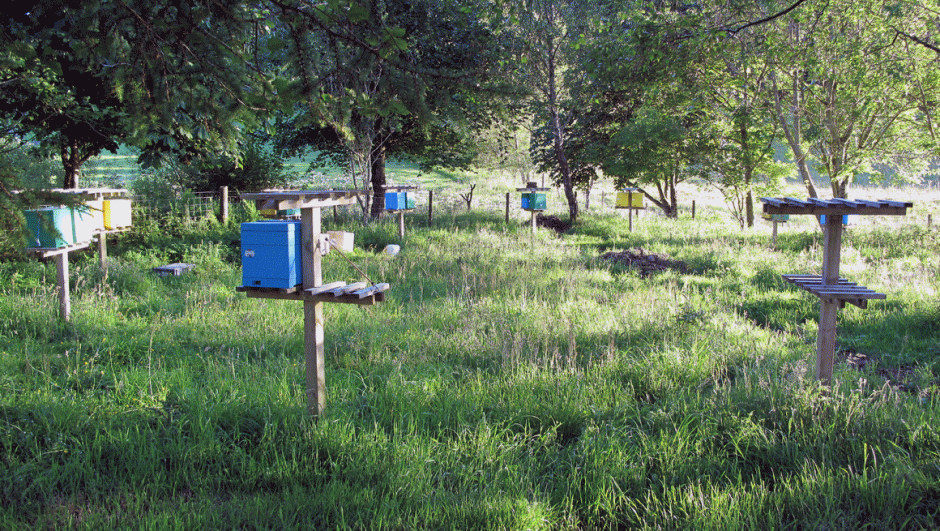
Recent reports in the media of threatened imports into Ireland of non-native honey bees has Irish beekeepers up in arms. The Scottish Native Honey Bee Society share the concerns of beekeepers in Ireland who have worked tirelessly and devoted a lifetime of beekeeping in bringing the native honey bee to the unique position it now occupies. To find out more please follow this link to the Native Irish Honey Bee Society ……. http://nihbs.org/
Conserving Black Bees
(Apis mellifera mellifera) in the Hebrides, Scotland
By Andrew Abrahams
We are grateful to the author Andrew Abrahams and the editor of the American Bee Journal for permission to use this article.
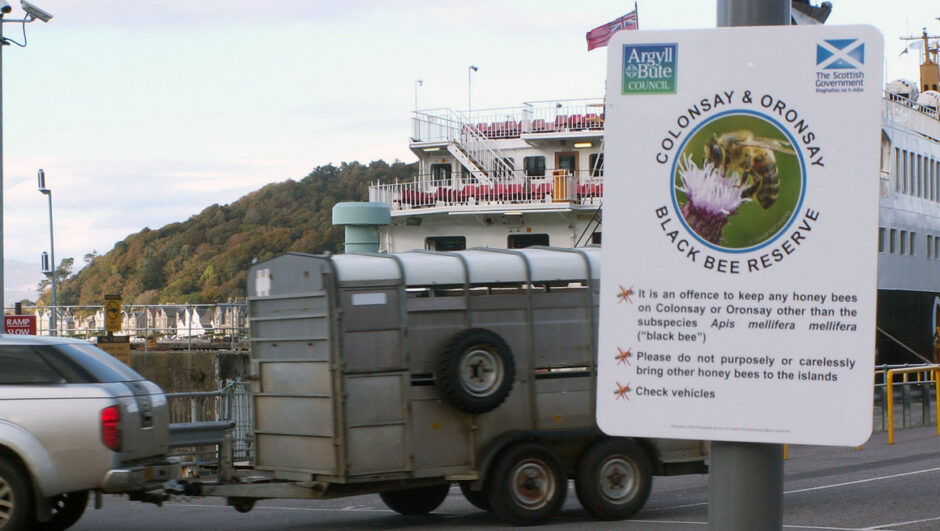
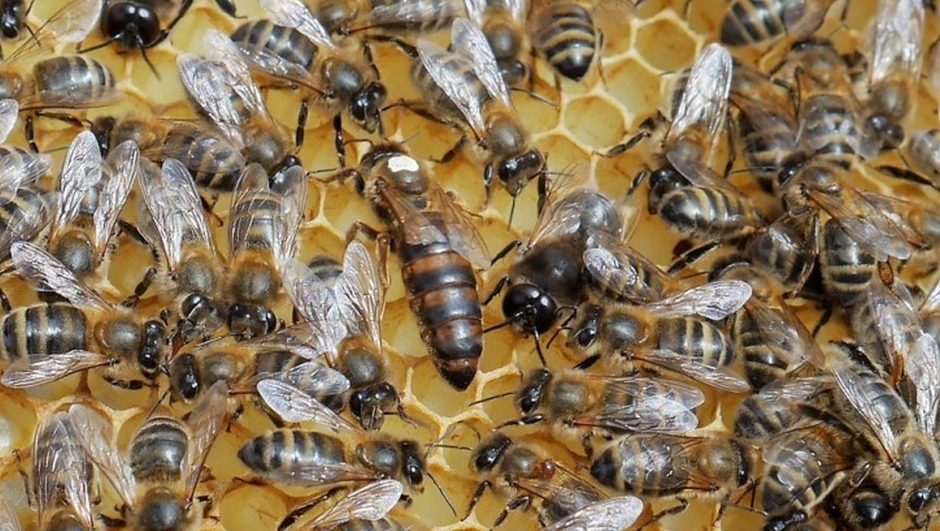
Readers might ask, why on earth spend much of a lifetime conserving what most beekeepers perceive as an aggressive, unproductive race of honey bee — a race perhaps left behind by history? I was fortunate, often by chance rather than grand design, to gather up some pure remnants of Scotland’s native honey bee (Apis mellifera mellifera) in the late 1970s and since then I have managed over decades to improve this population in the isolation of the remote island of Colonsay, which lies 16 miles off the west coast of Scotland (see https://colonsay.org.uk).
Continue reading “Conserving Black Bees”Queen rearing: five stages to manage
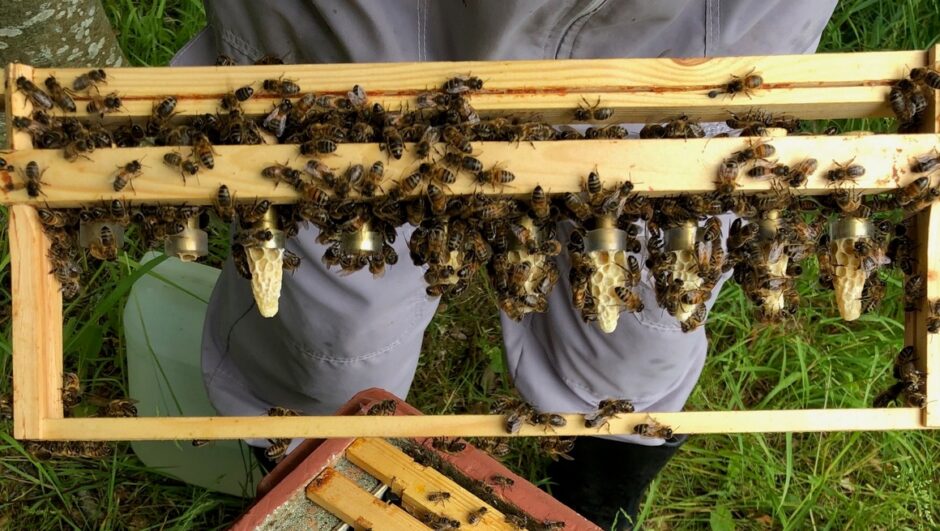
Queen rearing can be a hugely rewarding aspect of beekeeping when successful and the most exasperating when it does not go to plan. I recommend you embark on it willing to learn incrementally from your experience and not be deterred by disappointments. Success generally follows careful application and practice of sound guidance.
There are five basic stages to plan and manage, from the laying of eggs to successfully mated queens laying eggs in their own colonies. I will explain each of these, briefly, highlighting key aspects. These stages involve the raising of queen cells from fertilised worker eggs rather than using swarm, supersedure or emergency cells already drawn by bees.
Continue reading “Queen rearing: five stages to manage”The Moorfoot Group
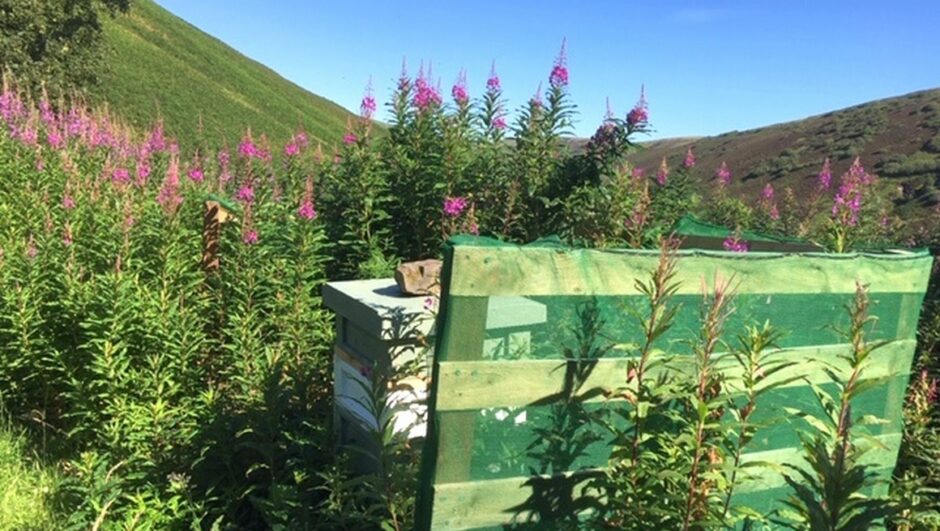
The Moorfoot Group currently comprises six beekeepers setting up an isolation Amm mating apiary in the Moorfoot area. We aim to develop approximately 20 Amm colonies to overwinter in the the Edinburgh, West Linton, Gordon, Penicuik and Kirknewton areas. At present we have approximately sixteen queenright Amm and hybrid/ Amm colonies, mostly grafted by us from Amm frames kindly donated by Kate Atchley and John Durkacz with additionally five grafted Amm queen cells which are awaiting local mating. The locally mated hybrid/ Amm colonies are to supply Amm drones and will be transferred to Moorfoot next April before local non Amm stowaway drones can hitch a ride.
The philosophy of the group was to site the apiary where no sensible beekeepes would want a colony.
However we have found that if the transferred colonies can manage the harsh springs there is ample forage for a good honey crop that will help the site to be self sustainable.
We’re grateful to have recieved a £400 grant from SAMMBA and thank John and Kate for their generous assistance.
Jim Lindsay
SNHBS 4th Annual Meeting
Loch Leven Community Campus, Muir, Kinross – 14 March 2020
By Justine Swinney
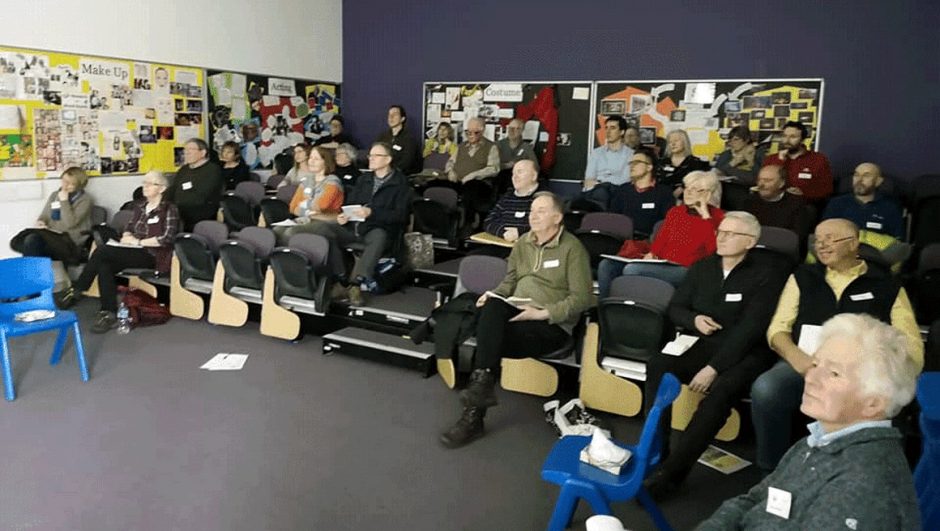
Thanks to everyone who attended our Annual meeting on 14 March at the Loch Leven Community Campus in Muir, Kinross. Considering the uncertain situation we were in just nine days before the full Covid-19 lockdown, we had an impressive turnout; and thank you to everyone for following the guidance at that time in terms of vigilant handwashing etc.
Jo Widdicombe, President of BIBBA (Bee Improvement and Bee Breeders Association) valiantly journeyed up from Cornwall and gave us two inspiring talks on bee improvement (read more about Jo’s presentation here).
Continue reading “SNHBS 4th Annual Meeting”Borders & Lothians breeders get together
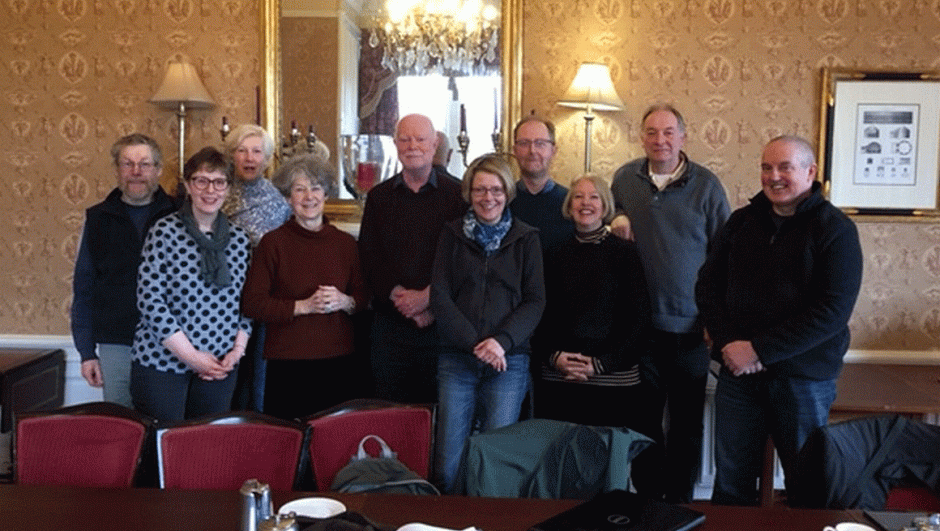
Native bee breeders and would-be breeders from the Lothians and Borders met in March to discuss how they might help one another through the coming season.
Continue reading “Borders & Lothians breeders get together”Sourcing native Scottish honey bees
Many members are seeking to buy native bees and been frustrated by the lack of stocks and information about breeders. So let us explain the current situation, to avoid disappointment, and outline SNHBS’s plans to increase Amm availability for the future.
Continue reading “Sourcing native Scottish honey bees”Queen rearing and bee breeding groups
Pathways to success
Why have a queen rearing and breeding group?
Breeding groups form a vital part of the work of the Scottish Native Honey Bee Society. They work well by pooling their expertise, sharing equipment and having access to larger numbers of good locally adapted stocks. Although groups show differences in their organisation reflecting local circumstances and preferences some features are likely to be shared.
Continue reading “Queen rearing and bee breeding groups”Forging Links in Lothian and the Borders
[I apologise for the very late publishing of Kate’s post about the Lothian and Borders Breeding Group. Perhaps this can serve as a reminder that it soon will be time for all of us to think about next year’s breeding programme. We look forward to hearing more from the Lothian and Borders Group.
Kitta 7 December 2019]
13 April 2019:
Four members of SNHBS met in Humbie, East Lothian today to look at ways of working together to promote A.m.m. bees in the area south of Edinburgh. On the agenda were group aims, bee breeding and queen rearing techniques, skills development needs, access to suitable areas for mating apiaries and protocols for the use of such apiaries by members of the group. Continue reading “Forging Links in Lothian and the Borders”
Colonsay’s Honeybee Reserve given international acclaim
[Article from the August 2019 newsletter]
World leading honeybee researcher Professor Tom Seeley from Cornell University, Mass. U.S.A. recently honoured Colonsay’s Black Bee Reserve with a two-day visit to study at first-hand the behaviour of our native honeybee, Apis mellifera mellifera, and also to learn about the conservation work, breeding and management systems being carried out by the island beekeeper, Andrew Abrahams.
Continue reading “Colonsay’s Honeybee Reserve given international acclaim”